


October Gardening Tips for Healthy Soil Fall Crops and Winter Prep
October is a turning point in the garden. Warm-season plants slow down, cool nights arrive, and the soil starts preparing for its long winter rest. What you do now can decide how healthy your garden looks in spring.
This is the month to clean up tired beds, feed the soil, protect roots, and plant the right cool-season crops before deep cold settles in. A little effort in October pays off in stronger soil, better moisture retention, fewer weeds, and healthier plants when the weather warms again.

Start with a fall garden reset
Before adding compost or mulch, take a close look at each bed. October cleanup should be practical, not too perfect. The goal is to remove what could cause problems while saving natural materials that help the soil.
Pull out spent annual vegetables, diseased foliage, rotting fruits, and weeds that have gone to seed. Old tomato vines, squash plants with mildew, and insect-damaged leaves should leave the garden instead of staying in the compost pile, especially if disease was present.
Healthy plant material can often be chopped and composted. Small pieces break down faster and help create a balanced compost mix.
A smart October reset includes:
Removing dead or diseased plants
Cutting back perennials only where needed
Clearing weeds before they spread seed
Saving dry leaves for mulch or compost
Cleaning empty containers and garden tools
Checking irrigation lines before freezing weather
Resist the urge to strip every bed down to bare soil. Bare soil is exposed soil. Wind, rain, and freeze-thaw cycles can compact it, wash nutrients away, and leave it vulnerable to weeds. Once cleanup is done, cover the soil with compost, mulch, fall crops, or cover crops.
Prepare soil for winter before it goes dormant
Healthy spring gardens begin with fall soil care. In October, soil is often still workable, and microbes remain active in many regions. That makes it a good time to add organic matter and correct problems before winter slows everything down.
Start by loosening compacted areas with a garden fork. Avoid aggressive tilling if your soil is already in decent shape. Turning soil too much can disturb earthworms, fungal networks, and soil structure. Instead, gently aerate and layer organic material on top.
If your garden struggled this year, October is a useful time to ask why. Did water pool after rain? Did plants look pale even with regular watering? Did roots stay shallow? Soil texture, drainage, and nutrient levels all play a role.
For a basic winter prep routine, follow this sequence:
Remove weeds and diseased plant matter.
Loosen compacted soil with a fork.
Add compost across the surface.
Water lightly if the soil is dry.
Cover with mulch, leaves, or chips.
This protects the soil while organic matter slowly breaks down. By spring, beds are easier to work, roots have a better start, and the soil holds moisture more evenly.
Feed beds with Tank's 100% organic compost
Compost is one of the best amendments for October because it helps soil in several ways at once. It improves texture, supports beneficial soil life, and adds slow-release nutrients.
Using Tank's 100% organic compost is a practical way to build nutrient-rich soil before winter. Spread it over vegetable beds, flower beds, around shrubs, and in raised beds that need replenishing after summer crops.
A thin, even layer is usually enough for seasonal maintenance. For tired beds or new planting areas, use a deeper layer and mix it gently into the top few inches of soil. In established perennial beds, keep compost near the root zone but avoid piling it directly against stems or crowns.
Compost helps sandy soil hold more moisture and helps clay soil become easier to work. It also gives soil organisms something to feed on through the cooler months. That living activity is part of what makes compost so valuable.
Think of October compost as a slow meal for the soil. It does not force instant growth. It builds steady fertility for the next season.
Plant fall crops that thrive in cool weather
October planting depends on your region, but many gardeners can still grow cool-season crops, especially with protection. In warmer areas, October can be one of the best planting months of the year. In colder regions, it may be time to plant quick crops, overwinter hardy varieties, or focus on garlic and cover crops.
Good fall crops include:
Lettuce
Spinach
Kale
Arugula
Radishes
Carrots
Beets
Turnips
Green onions
Cilantro
Parsley
Garlic
Leafy greens are often the easiest choice. They germinate well in mild weather, tolerate cool nights, and do not need the same heat as summer vegetables. Root crops can also do well if planted early enough and kept evenly moist.
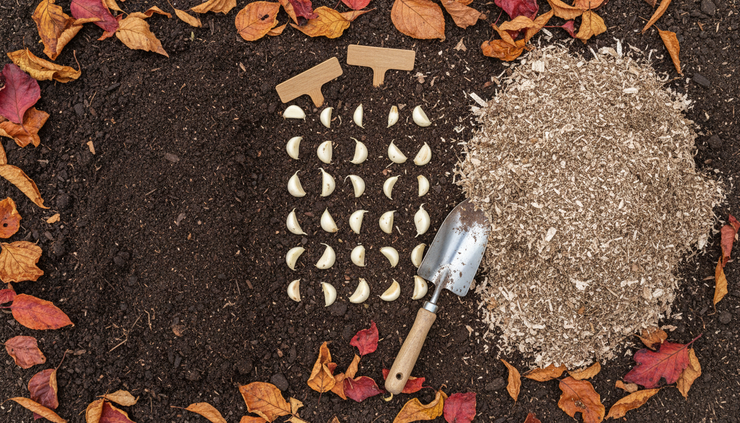
Garlic is a classic October planting in many parts of the country. Plant individual cloves with the pointed end up, then cover them with soil and mulch. They root before winter and resume strong growth in spring.
If frost is expected soon, use row covers, low tunnels, or cold frames to extend the growing season. Even a simple fabric cover can help protect tender greens from light frost.

Match crops to your local weather
October looks different across the United States. A gardener in Arizona may still be planting a wide range of vegetables, while a gardener in Minnesota may be preparing beds for snow. Use your local frost dates as a guide, then choose crops that match the time you have left.
A simple rule helps: plant fast-growing greens when time is short, and plant longer-season crops where mild weather lasts.
If nights are already cold, focus on:
Garlic
Spinach
Kale
Arugula
Cover crops
Compost and mulch preparation
If your region has mild fall weather, add:
Carrots
Beets
Lettuce
Broccoli starts
Cabbage starts
Herbs like cilantro and parsley
Water newly planted seeds and transplants consistently. Fall air may feel cool, but young roots still dry out quickly in shallow soil.
Protect plants with fine composted mulch
Mulch is one of the most useful October tools in the garden. It insulates soil, slows moisture loss, reduces weed pressure, and keeps heavy rain from crusting the surface.
Fine composted mulch is especially useful around vegetables, herbs, perennials, and young shrubs. Because it has already broken down more than raw wood material, it blends well into garden beds and adds organic matter over time.
Apply it after watering and after adding compost. Keep the layer even, but leave breathing room around plant stems. Mulch piled against stems can trap moisture and invite rot.
Use fine composted mulch around:
Fall greens
Garlic beds
Herb plantings
Perennials
Flower borders
Raised beds
Newly planted shrubs
A moderate layer gives roots protection without smothering the soil. In colder climates, mulch also helps buffer freeze-thaw cycles that can push shallow-rooted plants out of the ground.
For vegetable beds, fine composted mulch has another benefit. It keeps soil from splashing onto low leaves during rain, which can reduce the spread of soil-borne disease.
Use decorative wood chips for beauty and insulation
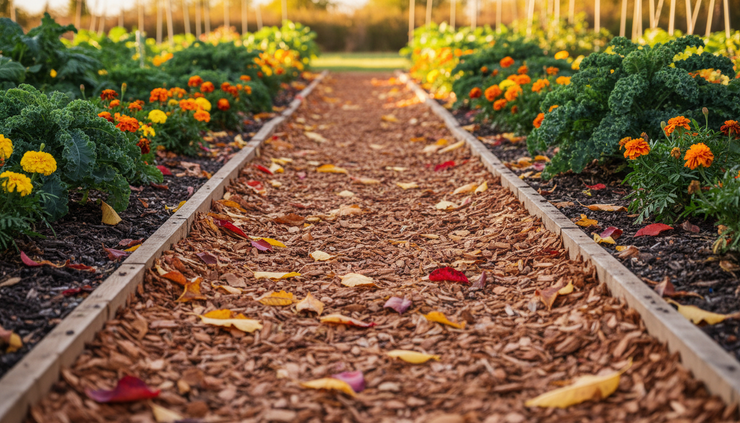
Not every mulch has to serve the same purpose. Fine composted mulch works well in growing beds, while decorative wood chips are a great fit for paths, borders, foundation plantings, and ornamental areas.
Wood chips help insulate soil, conserve moisture, and reduce weeds. They also give the garden a finished look during a season when many plants are fading. That visual order can make fall cleanup feel more rewarding.
Use decorative wood chips in places like:
Garden paths
Around trees and shrubs
Flower bed edges
Seating areas near garden beds
Front yard planting beds
Between raised beds
Keep chips a few inches away from tree trunks, shrub stems, and building foundations. Good airflow matters, especially during cool, damp months.
Wood chips break down slowly, which is useful in low-maintenance areas. As they age, they add organic matter to the surface layer of soil. For vegetable beds where frequent planting happens, use compost or fine mulch instead of large chips.
Support healthy growth with the right fertilizers
Compost improves soil structure and long-term fertility, but some gardens also need a more direct nutrient boost. October feeding should be balanced and thoughtful. The goal is not to push tender, weak growth right before winter. The goal is to support roots, soil biology, and established plants.
This is where SuperMix Fertilizer and AgriGro prebiotic fertilizer can fit into a fall garden plan.
SuperMix Fertilizer can help provide key nutrients for plants that are still growing, especially fall vegetables, herbs, and new plantings. Use it according to the product directions and apply it where active growth is still happening.
AgriGro prebiotic fertilizer supports the soil environment by feeding beneficial microbial activity. That matters because soil life helps break down organic matter and make nutrients available to plants. Pairing a prebiotic fertilizer with compost can support a healthier root zone going into winter.
A practical October feeding plan might look like this:
Garden area | Best October support |
Raised vegetable beds | Tank's 100% organic compost, SuperMix Fertilizer for active fall crops, fine composted mulch |
Garlic beds | Compost before planting, mulch after planting |
Perennial beds | Compost around root zones, fine composted mulch for winter cover |
Shrub borders | Compost near drip lines, decorative wood chips for insulation |
Tired soil | Compost plus AgriGro prebiotic fertilizer to support soil life |
Always follow label directions for fertilizer rates. More is not better. Overfeeding can stress plants, waste money, and send nutrients where they do not belong.
Water after feeding
After adding compost, fertilizer, or mulch, water the area if rain is not coming soon. Moisture helps settle amendments into place and supports soil organisms. In dry fall weather, newly planted crops and amended beds may still need regular watering.
Morning watering is best. It gives leaves time to dry before cool nights arrive. Wet foliage overnight can raise the risk of fungal problems, especially in thick plantings.
Build a simple October garden checklist
October can feel busy, so work in order. The best approach is to handle the tasks that protect soil and plants first, then add finishing touches.
Use this checklist as a guide:
Clean out spent summer crops and weeds.
Leave healthy roots in the ground when possible to protect soil structure.
Add Tank's 100% organic compost to beds that grew heavy feeders.
Plant fall crops suited to your region and frost window.
Plant garlic where winters are cold enough for proper development.
Apply SuperMix Fertilizer to actively growing fall crops as directed.
Use AgriGro prebiotic fertilizer to support soil biology.
Cover exposed soil with fine composted mulch.
Add decorative wood chips to paths and ornamental areas.
Protect tender crops with row covers when frost threatens.
Empty and store fragile containers before hard freezes.
Drain hoses and check irrigation if freezing weather is near.
Do not try to do everything in one day. Start with beds that will grow food this fall or early next spring. Then move to perennials, shrubs, paths, and containers.
Avoid common October gardening mistakes
Fall gardening is forgiving, but a few mistakes can make spring harder.
One common problem is leaving soil bare all winter. Even empty beds need cover. Use compost, mulch, leaves, straw, or a cover crop to shield the surface.
Another mistake is mulching too tightly around stems and trunks. Mulch should protect roots, not smother crowns or bark. Leave a small open ring around the base of plants.
Gardeners also sometimes fertilize too heavily in fall. Strong fertilizers can push soft growth that cold weather may damage. Feed active fall crops, but avoid forcing growth on plants preparing for dormancy.
Watch for these issues:
Piling mulch against plant stems
Using diseased plant material in compost
Planting warm-season crops too late
Letting new seedlings dry out
Ignoring local frost timing
Leaving irrigation parts exposed to freezes
Forgetting to label fall plantings
A clean label in October saves confusion in spring, especially with garlic, bulbs, and overwintered crops.
Give your garden a strong finish before winter
October is not just the end of the growing season. It is the setup month for everything that comes next. When beds are cleaned, fed, planted, and protected, the garden enters winter in better shape.
Focus on the basics: feed the soil with Tank's 100% organic compost, plant cool-season crops while conditions allow, protect beds with fine composted mulch, and use decorative wood chips where beauty and insulation matter. For active crops and healthier soil life, add SuperMix Fertilizer and AgriGro prebiotic fertilizer as part of a balanced fall plan.
A few October tasks can make the whole garden easier to manage next year. Start with one bed, add compost, cover the soil, and keep going while the weather holds. Spring growth begins with the work you do now.


Comments